
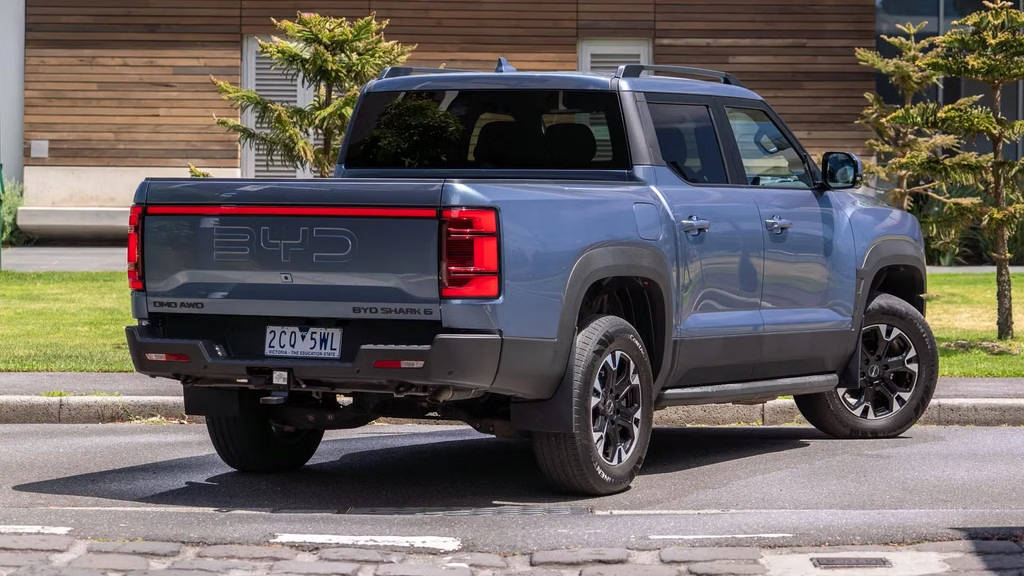
Ford CEO Jim Farley recently suggested that Chinese pickup trucks lack the chassis know-how or towing pedigree of a Ranger or a Hilux. Weeks later, BYD filed paperwork lifting the Shark 6’s tow rating to match the Ranger exactly, which is either a coincidence or the best comeback in recent automotive memory.
Either way, it’s worth asking which Chinese EVs for towing actually deserve bragging rights, because most of them have none. Of the roughly 136 electric models sold in China, only 70 carry any official towing approval, and the number of genuinely capable, tow-rated Chinese NEVs on the global market is even smaller. Here’s how the real contenders stack up, ranked by braked towing capacity.
7. Xpeng G6: 1,500 kg

The most affordable car on this list by a wide margin, and proof the towing conversation is trickling down into mid-size family SUVs. It won’t be dragging anything up a mountain pass, but 1,500kg covers a decent box trailer or a light caravan, more than most of Xpeng’s own lineup, let alone most of its Chinese rivals, can currently claim.
6. Zeekr 7X: 2,000 kg
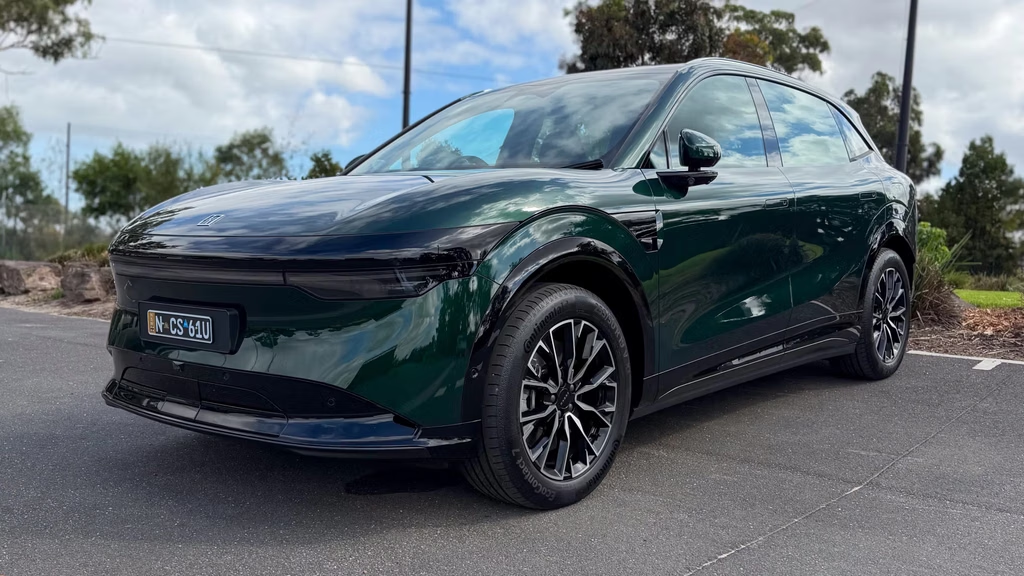
The most interesting entry on this list, because it’s an ordinary electric crossover with zero off-roader pretensions, and it’s still rated to tow two tonnes. No combustion engine or range extender to lean on.
However, it is a well-sorted battery EV that picked up a genuine tow rating in Australia, enough for a small boat or a camper trailer.
5. M-Hero 1: 2,500 kg

The M-Hero 1 is Dongfeng’s answer to the Hummer EV, running 800kW, a 142.7kWh battery, and air suspension that lifts ground clearance to 335mm. It matches the Yangwang U8 on tow rating but can’t match it on usability: payload shrinks to just 507kg once you account for a kerb weight pushing 3.3 tonnes.
This only goes to show that a big tow number and genuine practicality aren’t always the same thing. It starts at around €158,000 in Europe.
4. Yangwang U8: 2,500 kg

The Yangwang U8 needs little introduction. It is an 880kW, four-motor extended-range hybrid SUV that can spin on its own axis and float across water.
Towing capacity feels almost beside the point next to numbers like that, but China’s own regulator has it certified at 2,500kg regardless. At roughly ¥1,098,000 (around $150,000), it’s built to worry the Mercedes G-Class, not to earn its keep hauling a trailer to the lake.
3. Denza B5 Leopard: 3,000 kg

BYD’s luxury off-road sub-brand, and the poshest thing on this list by a wide margin. Front and rear mechanical diff locks and hydraulic adaptive suspension back up the 3-tonne rating, wrapped in a cabin with massaging seats and a proper sound system.
It shares its hybrid hardware family with the Shark 6 Performance, one spot above it, which makes for good trivia: the cheaper pickup somehow out-tows the posher SUV that lent it the engine, mostly because body-on-frame construction gives it more chassis to reinforce.
2. BYD Shark 6 Performance: 3,500 kg
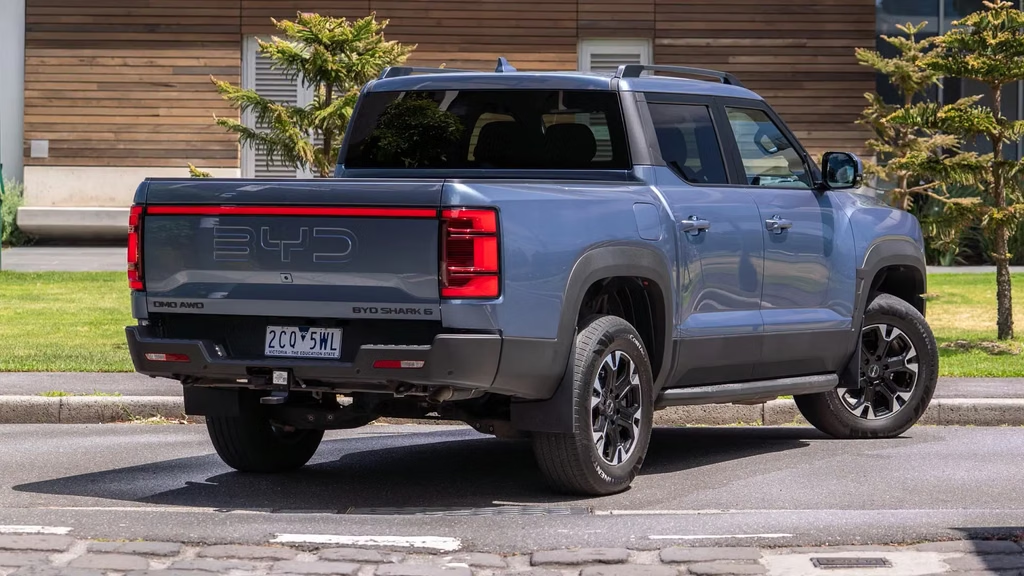
BYD’s answer, and a genuinely fast one. The new flagship grade swaps in a larger 2.0-litre turbo paired with front and rear electric motors, lifting the tow rating from 2,500kg to 3,500kg using a detuned version of the hybrid hardware first seen in the Denza B5.
It’ll hit 100km/h in 5.5 seconds, quicker than it has any right to be for something towing three and a half tonnes, and it undercuts the Cannon Alpha by over a thousand dollars. What it still doesn’t have is a single locking differential anywhere in the range, the one box left unticked.
1. GWM Cannon Alpha PHEV: 3,500 kg

The current benchmark, and the first Chinese ute to hit this number, launching with a longer electric-only range and a bigger combined range than its closest rival. A 37.1kWh battery pairs with a 2.0 litre turbo for 300kW and 750Nm combined, and it’s the only truck on this list with front, rear and centre locking differentials, which matters more than the headline figure once you’re actually off pavement.
Payload is a middling 685kg, and one local reviewer flagged an awkwardly placed spare wheel as a minor annoyance for tradies, but as a complete tow rig, nothing else here quite matches it.
Our Take
China never developed much of a towing culture, no real caravanning scene, no off-road trailer or boat-towing tradition, so most NEV makers simply never spent engineering budget reinforcing chassis members, upsizing brakes and cooling systems, or tuning suspension to resist sag under load.
None of that is beyond China’s capability, its heavy-truck industry proves as much, it’s just never been a priority for brands like Nio, Li Auto, Xiaomi or Geely’s own-badged EVs, whose sales remain overwhelmingly domestic. That’s changing fast as more Chinese brands chase export markets where towing is a genuine cross-shopping factor, which means this ranking will almost certainly need updating within the year.

Hillary started his automotive writing journey at HotCars, and has written for CarNewsChina, GlobalSUV, and many other top auto blogs.
He loves to read, play chess, and supports Liverpool during the weekends


