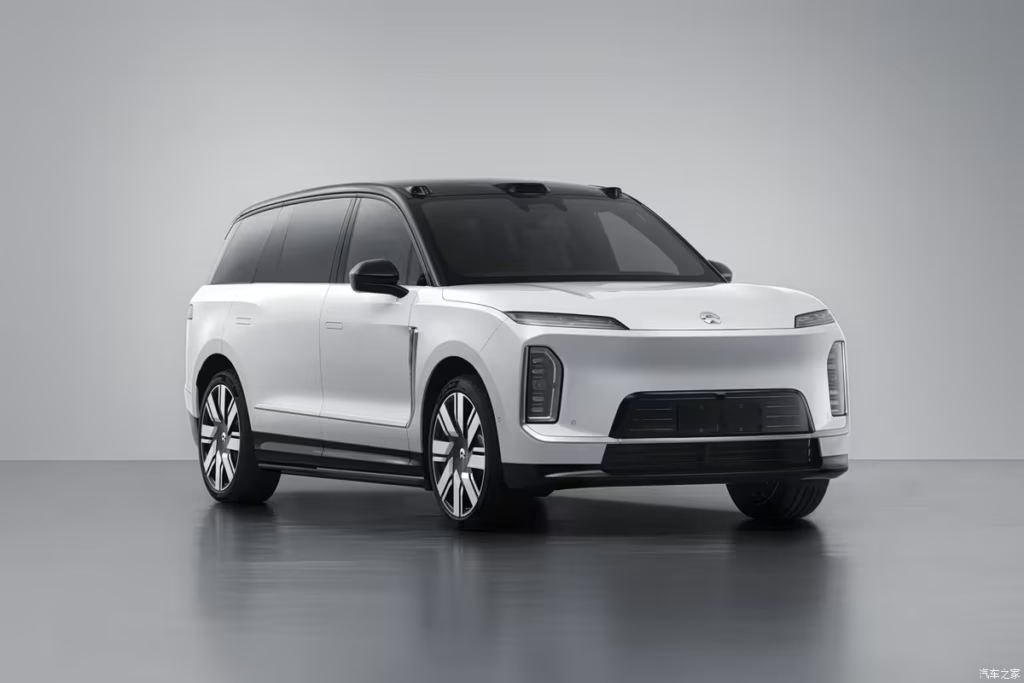
While EV automakers strive to offer the highest possible battery capacity, NIO prioritizes a 3-minute battery swap over a range the average commuter might not use. The flagship NIO ES9 is more about rethinking what “premium” means in full-size SUV EVs.
According to credible sources, the flagship ES9 will hold its technology launch around April 10, 2026. For buyers with access to NIO’s extensive battery-swap network, is a 620km CLTC range (compared to rivals’ 650km to 700km claims) a compromise or a sensible trade-off?

Design & First Impressions
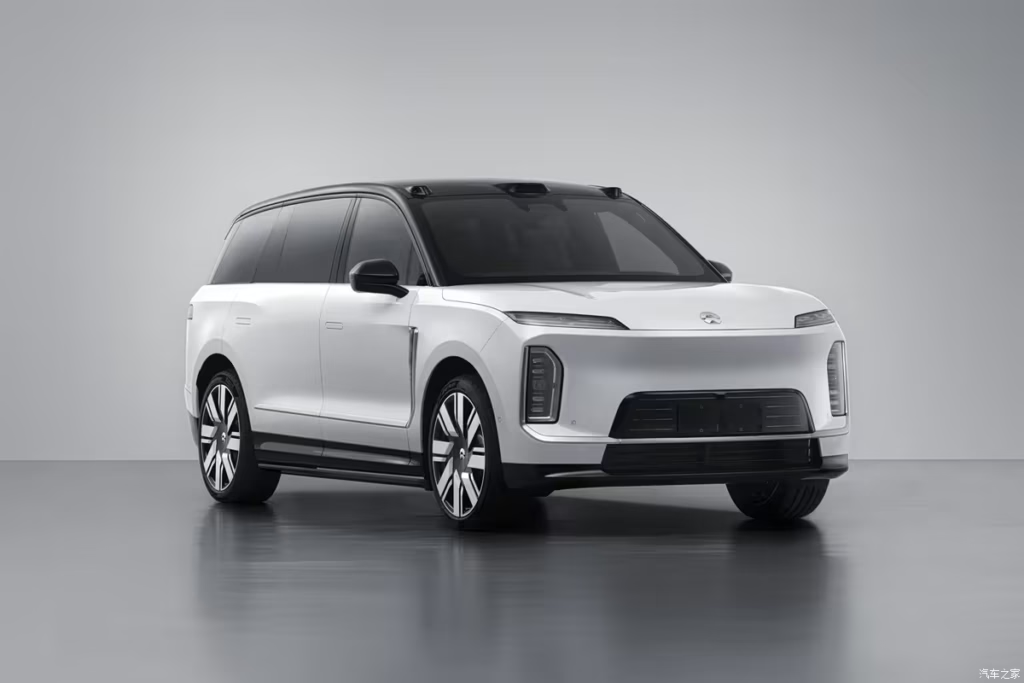
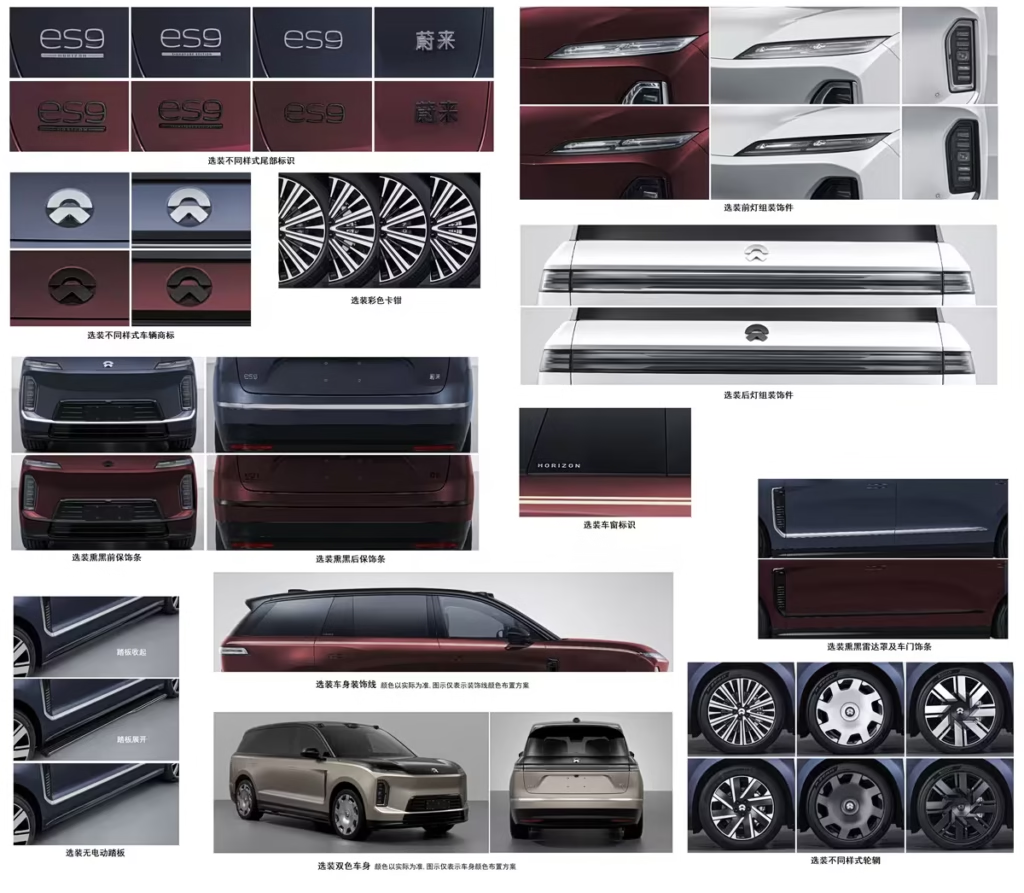
At 5,365mm long, with a 3,250mm wheelbase, the NIO ES9 is physically imposing, longer than a Cullinan. The “Sharknose” front fascia and the dual-layer, double-dash daytime running lights give it the characteristic NIO face while adding visual width. The three LiDAR units (one roof-mounted, and one on each front fender) seem better integrated than on some competitors, as they remain visible as small humps. NIO has also revealed that they will offer options such as a two-tone body, body trim lines, and “big pie” wheels for the ES9.
For the interior, NIO is reportedly moving away from the single massive rear screen common to full-size SUVs. Early indications suggest two smaller, independently adjustable screens. This shift prioritizes eye health for children and other passengers. The cabin follows the familiar NIO design language: a large central portrait-oriented touchscreen, a slim digital instrument cluster, and minimal physical buttons. The interior materials are expected to match or exceed those of the ET9, with extensive leather, soft-touch surfaces, and metal trim. The absence of a traditional steering column (due to the steer-by-wire systems) should allow for a more flexible interior layout, though final production details remain unconfirmed until the launch.
Powertrain & Performance
The ES9 will be powered by front- and rear-drive motors produced by NIO Power Technology’s Xinqiao Branch, with maximum power outputs of 180 kW and 340 kW. The battery is expected to be equipped with a 102 kWh battery pack, with CLTC ranges of 580 km, 600 km, and 620 km, respectively, depending on the weight configuration. Compared to rivals with similar battery sizes that claim a range of 650km and above, NIO’s ES9 range is quite modest.
The smaller range is due to the ES9 physical limits. NIO’s argument is that users’ access to its battery-swap network with a range of 620km is sufficient, with the ability to swap within three minutes, offering a better experience than the higher-range numbers the average commuter might never maximize. Also, during cold weather, the battery range drops below the CLTC range anyway, making a 3-minute swap look like a better deal.

Driving Dynamics
The headline feature for the ES9 is the SkyRide chassis, which includes three breakthrough technologies: steer-by-wire, rear-wheel steering, and a fully active hydraulic suspension system. The steer-by-wire system eliminates the need for a physical steering column. It allows variable steering ratios to be adjusted dynamically. At low speeds, the wheel requires just 240 degrees of rotation lock-to-lock (just over half a turn), making parking and tight maneuvers easier for a vehicle of this size. The rear-wheel steering further reduces the turning circle to 10.9 meters, making it more agile than the smaller E8.
The fully active suspension is expected to deliver exceptional body control, though the weight may still cause body roll during aggressive cornering. NIO has historically excelled at wind and noise suppression, and the ES9 is expected to continue that trend. The driver assistance systems are powered by the Shenji NX9031 chip, with three LiDAR units providing near-360-degree perception.
Value & The Competition
Two strong direct competitors of the NIO ES9 are the AITO M9 and the Li Auto L9. Considering NIO’s pricing patterns, the three EVs are most likely in the same price bracket (about 600,000 yuan) when the NIO ES9 price is announced at launch.
The decision to shift the priority from battery range to battery swap time will either be a strength or a weakness for the ES9. How consumers perceive this shift in ideology, along with the no-steering change for the driver, will determine whether NIO’s concept is successful or not.
Editor’s Take
Considering NIO’s extensive network of battery swap stations in China, the ES9’s concept is pretty strong, especially during winter. However, the ES9 is built for isolation and ease of use, not particularly driver engagement. Enthusiasts seeking mechanical feedback will be disappointed.
Whether the ES9 will make it to international markets will depend heavily on the ecosystem NIO can build in other countries’ markets. Currently, the ES9’s major selling point is useless anywhere outside China. But should NIO build an extensive network in particularly cold countries like Canada, Norway, and Scandinavia, the swap-focused concept could gain significant favor.
Sources: Autohome, Yiche

Dollars loves following the latest innovations in automobile technology and sharing insights.
When she’s not writing, you can find her playing badminton or diving into a new opera piece.